





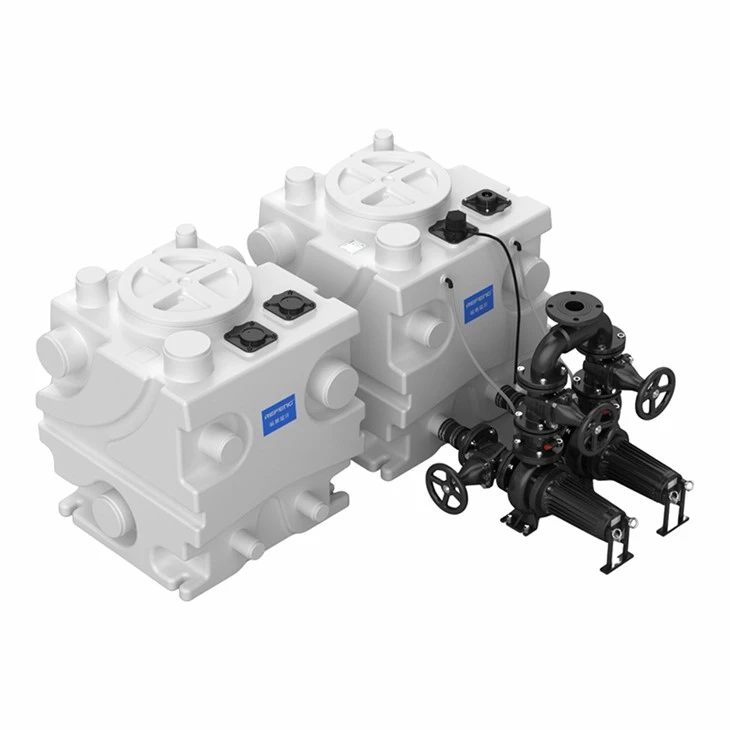
Hey there! As a supplier of Large Sewage Lifting Pumping Station, I often get asked about the ins and outs of the components in these stations. One key part that's super important is the solenoid valve. So, let's dig into what the function of a solenoid valve is in a large sewage lifting pumping station.
First off, what the heck is a solenoid valve? Well, it's a type of valve that uses an electromagnetic solenoid to control the flow of fluids. In the context of a sewage lifting pumping station, the fluid we're talking about is, of course, sewage. These valves are like the traffic cops of the sewage system, deciding when and where the sewage can go.
One of the main functions of a solenoid valve in a large sewage lifting pumping station is flow control. Sewage needs to be moved around in a very precise way. You don't want it just flowing willy - nilly. The solenoid valve can open and close to regulate the amount of sewage that enters or exits different parts of the pumping station. For example, when the pumps are working at full capacity, the valve can be adjusted to limit the inflow of sewage, preventing the system from getting overloaded. On the other hand, when the pumps have some capacity to spare, the valve can open wider to allow more sewage in.
Another crucial function is isolation. Sometimes, parts of the sewage lifting pumping station need to be taken offline for maintenance or repair. The solenoid valve can be used to isolate specific sections of the system. Let's say there's a problem with one of the pumps. The solenoid valve can be closed to cut off the flow of sewage to that pump area, so the maintenance crew can work safely without having to deal with a continuous stream of stinky sewage.
In a Large Horizontal Pump Sewage Lifting Pumping Station, solenoid valves also play a role in protecting the pumps. These pumps are expensive pieces of equipment, and we don't want them to get damaged. The valves can be set up to detect abnormal pressure or flow conditions. If the pressure in the system gets too high, the solenoid valve can open to relieve the pressure, preventing damage to the pumps and other components. Similarly, if there's a sudden drop in flow, the valve can close to stop air from entering the system, which could cause cavitation in the pumps.
Solenoid valves are also great for automation. In modern large sewage lifting pumping stations, automation is key. These valves can be connected to a control system that can adjust their operation based on various parameters such as time, level of sewage in the tanks, and the status of the pumps. For example, during off - peak hours when there's less sewage flow, the control system can send a signal to the solenoid valve to reduce the inflow. This not only saves energy but also extends the lifespan of the equipment.
Let's talk about the types of solenoid valves commonly used in large sewage lifting pumping stations. There are direct - acting solenoid valves and pilot - operated solenoid valves. Direct - acting valves are simple and can work with low pressures. They're great for smaller applications within the pumping station, like controlling the flow of additives or small amounts of sewage. Pilot - operated valves, on the other hand, are more suitable for high - flow and high - pressure situations. They use a pilot mechanism to control the main valve, allowing them to handle large volumes of sewage.
Now, I know what you're thinking. "That all sounds great, but how reliable are these solenoid valves?" Well, modern solenoid valves are designed to be very reliable. They're made from high - quality materials that can withstand the harsh environment of a sewage lifting pumping station. The components are often corrosion - resistant, which is important because sewage is full of all sorts of corrosive substances. However, like any piece of equipment, they do require regular maintenance. This includes checking for leaks, cleaning the valve components, and testing the solenoid coils to make sure they're working properly.
In a large sewage lifting pumping station, the solenoid valves also need to be compatible with the other components of the system. They need to be able to communicate effectively with the pumps, sensors, and control systems. This is why it's so important to choose the right solenoid valves from a reputable supplier. At our company, we make sure that the solenoid valves we provide are fully compatible with our Large Sewage Lifting Pumping Station and Large Horizontal Pump Sewage Lifting Pumping Station systems.
If you're in the market for a large sewage lifting pumping station or need to upgrade the solenoid valves in your existing system, we're here to help. Our team of experts can work with you to understand your specific requirements and recommend the best solutions. Whether you need a simple direct - acting valve or a more complex pilot - operated valve, we've got you covered.
Contact us today to start a conversation about your sewage lifting pumping station needs. We're ready to provide you with top - quality products and excellent service.
References

- "Sewage Pumping Station Design and Operation" - A technical guidebook on sewage pumping stations.
- Industry reports on the use of solenoid valves in wastewater management.