


Coupling Device
Our goal is to be your true partner in Coupling Device field in China. Hangzhou Ruifeng Environmental Protection Technology Co., Ltd. is a diversified high-tech enterprise integrating research and development, manufacturing, sales and service. We have a skilled engineering team dedicated to refining every stage, from product development and process improvement to production oversight, ensuring every product delivered meets rigorous quality and performance standards. The price is competitive and the product is quality-assured, which is a good choice for your long-term cooperation.


Why Choose Us
Quality Control
We operate under strict ISO 9001 quality management standards, ensuring every product goes through complete performance testing before delivery, guaranteeing stable and dependable quality.
OEM & ODM Services
For OEM and ODM projects, once you share your specific needs, our experienced engineering team will promptly develop tailored solutions for you.
Production Equipment
We are equipped with a full set of advanced processing and manufacturing equipment, this includes surface grinders, lathes, power milling machines, universal lift table milling machines, universal lift table milling machines and other processing equipment. These equipment enable us to strictly control each production link to ensure the delivery of qualified and high-performance products.
Patents & Certifications
We hold multiple certifications and patents, including environmental management, quality management, occupational health and safety systems, as well as design and utility model patents.
Product Advantages
Stable Power Transmission
Coupling devices ensure consistent torque transfer between shafts, reducing energy loss and improving operating efficiency. Their solid structure helps maintain smooth rotation even under varying loads.
Effective Misalignment Compensation
They can absorb slight angular, axial, or parallel misalignment, preventing excessive stress on bearings and shafts. This reduces wear and improves long-term reliability.
Vibration and Shock Absorption
By damping vibration and mitigating sudden impacts, couplings protect connected equipment from premature damage. This contributes to quieter operation and longer service life.
Simple Installation and Maintenance
Most coupling designs are compact and easy to assemble, allowing quick replacement when needed. This helps reduce downtime and maintenance costs in industrial applications.
Specification
|
Item |
Specification |
Customization Options |
|
Pump Body Material |
Plastic / Aluminum Alloy / Stainless Steel |
Material selection based on medium type (water, oil, chemicals) |
|
Diaphragm Material |
Nitrile Rubber (NBR) / EPDM / Viton |
Chemical-resistant diaphragms for special liquids |
|
Inlet / Outlet Size |
20–40 mm (3/4" – 1.5") |
Custom inlet/outlet diameter and threaded/hosetail connection |
|
Max Flow Rate |
20–60 L/min |
Adjustable flow rate depending on diaphragm size |
|
Max Suction Lift |
4–6 m |
Higher lift design available for deep containers |
|
Max Discharge Head |
6–12 m |
Reinforced structure for higher pressure output |
|
Operating Temperature |
0–60°C (standard) |
Upgraded materials for high-temperature liquid transfer |
|
Stroke Type |
Manual Lever / Hand Rotary |
Custom handle design for ergonomic operation |
|
Application Media |
Water, diesel, light oils, fertilizers, mild chemicals |
Compatibility adjustment based on customer's working environment |
|
Product Weight |
1.5–4 kg |
Can be optimized for portability |
|
Surface Treatment |
Polishing / Anodizing / Powder Coating |
Anti-corrosion and outdoor-grade coatings |
|
Packaging |
Standard export carton |
Custom label, logo printing, or OEM packaging |
Benefits of Coupling Device
Misalignment Handling
Coupling devices allow for angular, axial, and parallel misalignment between connected shafts, reducing wear and extending machinery lifespan.
Shock Absorption
They act as buffers by absorbing vibrations and torque fluctuations. This is crucial in minimizing stress on rotating machinery and protecting sensitive components.
Operational Safety
Coupling devices can be designed to fail in a controlled manner in the event of overload, protecting expensive machinery from catastrophic failure.
Ease of Maintenance
Many coupling devices are designed for quick installation and easy maintenance, helping reduce system downtime and operational costs.
Improved Efficiency
By ensuring smooth torque transmission, coupling devices help improve the overall energy efficiency of machines.
Versatility
Coupling devices are available in various materials and designs, making them suitable for diverse operational conditions and applications.
Pump and Motor Connection
Coupling devices are widely used to link pumps and motors, ensuring smooth torque transfer and reducing vibration during operation. This helps maintain stable flow and extends equipment lifespan.
Industrial Machinery Transmission
In conveyors, mixers, compressors, and various processing equipment, couplings support efficient power delivery. They also compensate for slight shaft misalignment to protect mechanical components.
HVAC and Building Systems
Couplings connect fans, blowers, and drive motors to achieve steady airflow and reliable system performance. Their damping ability reduces noise and enhances operational stability.
Energy and Power Equipment
Used in generators, turbines, and rotating power units, couplings ensure continuous and safe energy transmission. Their durability supports long-term operation under demanding conditions.

Materials Used for Coupling Device
Steel
Steel is one of the most widely used materials due to its strength, durability, and ability to handle high-torque loads. Commonly use carbon steel, stainless steel, and alloy steel for rigid, gear, and flange coupling devices. Stainless steel offers corrosion resistance, making it suitable for applications exposed to harsh environments.
Cast Iron
Cast iron is used for coupling devices in medium-duty applications. It is strong, resistant to wear, and cost-effective. However, its brittleness makes it unsuitable for applications with high shock loads or where flexibility is required. Often make split muff coupling devices and sleeve coupling devices from cast iron.
Aluminum
Aluminum is a lightweight material that is used for coupling devices in low- to medium-duty applications. It offers good corrosion resistance and is easy to machine. Often use aluminum coupling devices in applications where weight reduction is important, such as in aerospace and automotive systems.
Brass
Use brass in applications requiring good corrosion resistance and lower friction, such as in fluid coupling devices and bush pin coupling devices. It is also used in environments where electrical conductivity is needed.
Bronze
Bronze is used in coupling devices where high wear resistance and durability are important. It is commonly used in bushings and pins within flexible coupling devices, offering low friction and resistance to corrosion.
Customization Options
|
Material Selection |
Steel, aluminum alloy, rubber, or composite materials can be selected based on operating conditions to meet strength and vibration damping requirements. |
|
Structure Type |
Supports flexible, rigid, diaphragm, and gear structures, suitable for various transmission environments. |
|
Mounting Dimensions |
Shaft hole diameter, keyway size, and length can be customized to ensure precise matching with equipment. |
|
Torque Rating |
Rated torque is adjusted according to load requirements to ensure stable, slip-free transmission. |
|
Surface Treatment |
Offers rust prevention, electroplating, or spray coating treatments to improve corrosion resistance and service life. |
Packaging & Shipping

Coupling Device Types
Classification by connection method
Threaded Coupling Device: This is a type of coupling device that connects pipes via threads. The inner wall of the coupling device is machined with threads that match the threads on the outer wall of the pipe, achieving a tight connection through screwing.
Socket Coupling Device: This type of coupling device connects pipes by inserting them into the socket of the coupling device. This connection can be achieved through welding, adhesive bonding, or mechanical locking.
Classification by diameter
Equal Coupling Device: An equal coupling device is used to connect two pipes of the same diameter. Both ends have identical inner diameters (or socket sizes), ensuring that the fluid passage dimensions remain unchanged after connection, without altering flow rate or pressure.
Reducing Coupling Device: Reducing coupling devices are used to connect two pipes of different diameters. One end has a larger inner diameter for connecting to a larger-diameter pipe, while the other end has a smaller inner diameter for connecting to a smaller-diameter pipe.
Classification by coupling device length
Half Coupling Device: A single-end coupling device typically has a connection interface (such as threads or a socket) on one end, while the other end is a flat face or a welded end.
Full Coupling Device: A double-end coupling device has connection interfaces (such as threads or sockets) on both ends, used to connect two pipes.
Application of Coupling Device
Industrial Applications
Used in firefighting systems, heating, and air supply/removal.
01
Marine Use
Essential for freshwater and seawater storage on ships and offshore facilities.
02
Power Generation
Utilized cooling return tanks, lubrication tanks, and compressed air tubes in power plants.
03
Manufacturing and Structural Engineering
Commonly employed in plant maintenance, water and gas delivery systems, and various engineering projects.
04
Auto Repair
The muffler pipe coupler connects sections of the vehicle's exhaust system, ensuring airtightness.
05
Installing Coupling Device Correctly
When installing a coupling device, it is crucial to dedicate time to aligning the equipment shafts properly to minimise vibrations and misalignment. This can significantly extend the lifespan of the equipment train and the plant's overall profitability.
Axial misalignment
Occurs when the gap between the shaft ends is not per specification, or goes out of specification while running due to factors like thermal shaft growth, pipe strain, etc.
Angular misalignment
The shafts are positioned at an angle other than zero degrees between their centerlines, or an angle is created while running due to base plate movement, pipe strain, etc.
Parallel offset misalignment
The shafts have an offset between their centerlines, or an offset is created while running due to base plate movement, pipe strain, etc.
Our Service
We provide a post-installation warranty period of two years, with electrical components covered for 18 months. During normal usage, all related parts and service expenses are included, and customers can rely on complete technical assistance and prompt after-sales support.
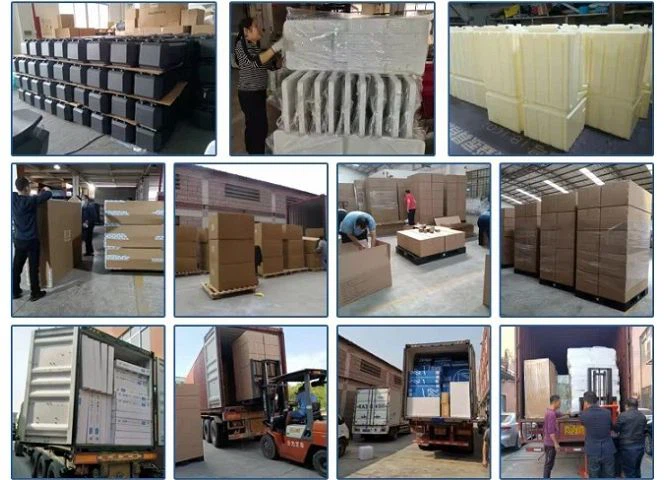
Packaging and Shipping

Our Certificate


FAQ
We are one of the most experienced coupling device suppliers in China, featured by quality products and good price. Please rest assured to wholesale high-grade coupling device made in China here from our factory. Contact us for quotation.
Stainless Steel Coupling Unit, coupling device, Cast Iron Coupling Unit